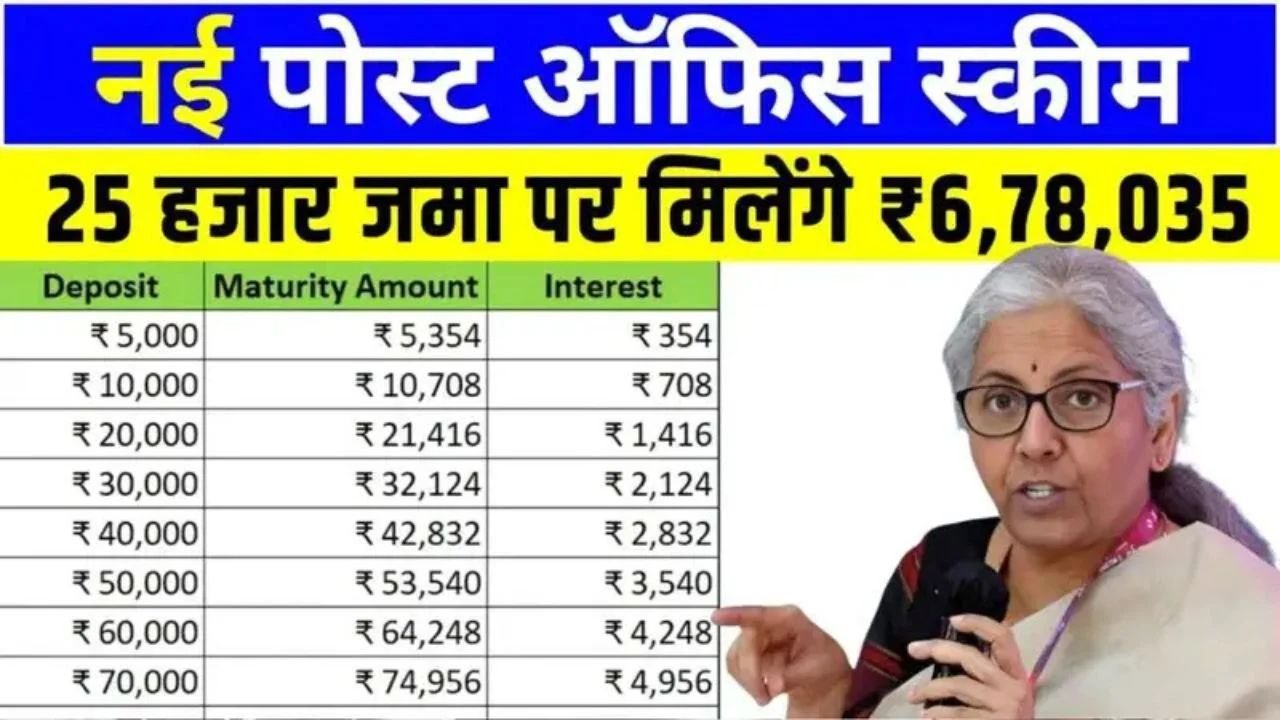
Post Office PPF Scheme: As parents, our deepest hope is to provide our children with a foundation that allows them to pursue their dreams without financial constraint. With the costs of higher education and specialized training rising, a strategic, long-term savings plan becomes an essential tool for realizing these hopes. Among the various options available, the Post Office Public Provident Fund (PPF) Scheme emerges as a uniquely reliable and rewarding choice, offering a blend of security, consistent growth, and significant tax advantages to help you build a substantial financial resource for your child.
The Lasting Impact of Early and Steady Investment
The true magic of financial planning lies not in sporadic large sums, but in the power of consistency. Beginning a savings habit early, even with a modest annual commitment, allows the principle of compound interest to work profoundly over time. This method transforms regular, manageable savings into a significant future fund, easing the potential burden of large future expenses. It’s a practice that prioritizes future security and opportunity, creating a dedicated resource for pivotal life moments such as college admissions or entrepreneurial ventures.
Post Office PPF Scheme: Complete Information Table
| Feature | Details |
|---|---|
| Scheme Name | Public Provident Fund (PPF) |
| Eligibility | Indian residents. A guardian can open an account for a minor. |
| Available At | Post Offices across India and authorized public/private sector banks. |
| Account Tenure | 15 years, extendable indefinitely in blocks of 5 years. |
| Minimum Annual Deposit | ₹500 |
| Maximum Annual Deposit | ₹1.5 lakh (across all PPF accounts held by an individual) |
| Interest Rate | Declared by the Ministry of Finance every quarter. Historically offers stable, inflation-beating returns. |
| Interest Calculation | Calculated monthly on the lowest balance between the 5th and last day of the month. Credited to the account annually. |
| Tax Benefits | EEE Status: Deposits qualify for Section 80C deduction, interest earned is tax-free, and maturity proceeds are entirely tax-exempt. |
| Lock-in Period | 15 years from the end of the financial year of account opening. |
| Partial Withdrawals | Permissible from the start of the 7th financial year, subject to terms and conditions. |
| Loan Facility | Available against the balance from the 3rd to the end of the 6th financial year. |
| Nomination | Facility is available at the time of opening or can be added later. |
| Risk Profile | Considered virtually risk-free due to sovereign guarantee. |
A Closer Look at the Post Office PPF Framework
The PPF is a long-term savings vehicle designed to encourage fiscal discipline while offering robust benefits. Its structure is built around a core tenure of 15 years, which can be extended, providing a forced savings mechanism that aligns perfectly with long-term goals like a child’s education. The scheme’s appeal is broadened by its accessibility, requiring a low minimum investment, and its resilience, being backed by the sovereign guarantee of the Government of India.
Fostering Financial Responsibility and Goal-Oriented Saving
Initiating a PPF account for your child does more than just accumulate money; it introduces a culture of future-focused planning. The mandated 15-year period, while a long commitment, serves a vital purpose: it protects the savings from being diverted for short-term needs, ensuring the money grows undisturbed for its intended purpose. This enforced discipline guarantees that a meaningful corpus will be available exactly when your child is ready to step into higher education or vocational training.
A Pillar of Certainty in an Unpredictable Economic Landscape
In contrast to investment avenues tied to the stock market’s fluctuations, the PPF offers a sanctuary of predictability. Its interest rate is set by the government and remains immune to market volatility. For parents, this translates to peace of mind, knowing that the savings earmarked for their child’s future are shielded from economic downturns and will grow at a steady, declared rate, making it a cornerstone of any risk-averse financial strategy.
The Advantage of Triple-Tax Exemption
One of the most compelling features of the PPF is its exceptional tax efficiency. It enjoys an Exempt-Exempt-Exempt (EEE) status under current Indian tax laws. This means the amount you invest is eligible for a deduction, the interest earned each year is entirely tax-free, and the final maturity amount is also received without any tax liability. This comprehensive tax benefit ensures that the full force of compound interest accelerates the growth of your savings, with no portion being diminished by taxes.
An Inclusive Plan for Diverse Family Budgets
The PPF scheme is thoughtfully structured to be within reach for families across the economic spectrum. You can start with a very modest annual contribution and increase it as your financial capacity improves. This flexibility ensures that the goal of securing a child’s future through a government-backed, stable instrument is not reserved for a few but is a realistic and wise option for many.
Frequently Asked Questions (FAQs)
Q1: How do I open a PPF account for my minor child?
You can open a PPF account for your child at any post office or authorized bank. As a parent or legal guardian, you will operate the account as the mandator until the child turns 18 years old.
Q2: What are my options once my PPF account matures after 15 years?
Upon maturity, you have a one-year window to choose: You can withdraw the full amount, extend the account for another 5-year block with continued contributions, or extend it without making any further deposits.
Q3: What if I am unable to deposit the minimum ₹500 in a particular year?
Failing to deposit the minimum amount will cause the account to become inactive. To reactivate it, you must pay a penalty of ₹50 for each defaulted year along with the minimum arrears of ₹500 for each of those years.
Q4: How is the PPF interest rate decided?
The Government of India, through the Ministry of Finance, reviews and sets the PPF interest rate every quarter. It is generally aligned with yields from government securities to ensure a fair return for savers.
Q5: Can an NRI continue an existing PPF account?
Non-Resident Indians (NRIs) are not permitted to open a new PPF account. However, if you opened an account while you were a resident of India, you are allowed to maintain it until its original 15-year maturity period ends, but you cannot extend it further.
Q6: Is there a limit to how many PPF accounts one person can manage?
An individual can have only one PPF account in their own name. However, a parent is allowed to manage their personal account as well as act as the guardian for accounts opened in the name of their minor children.
In Conclusion
Opting for the Post Office PPF scheme is a thoughtful step toward transforming parental aspirations into tangible security. It represents a commitment that is both prudent and compassionate, leveraging time, discipline, and favorable policy to build a foundation for your child’s aspirations. By starting this journey, you are doing more than saving—you are actively constructing a platform from which your child’s future can take flight, unburdened by financial limitation.
